A consulting group that
rebuilt itself around AI.
We started in 2020 as a boutique digital consultancy in Dubai — helping global brands and regional groups design, engineer and run digital experiences that behaved themselves in production.
A decade of consulting shaped the muscle. Then agent tooling got good enough that our delivery model stopped making sense as it was. We had a choice: bolt AI onto what we already did, or rebuild how we deliver around it.
We rebuilt. NeuralWorks is the result — and we ran it on ourselves before we offered it to anyone else.
Three pillars.
One accountable team.
From the first strategy conversation to the running system four years later — the same people, under one discipline, augmented by agents.
Digital strategy, product management, program leadership and CX design. The consulting muscle we built for a decade, now paired with a hard-nosed view of what actually works with AI.
Full-stack engineering, cloud transformation and QA automation — reshaped around Tests-as-Spec, shadow data and the two-person release rule. The output is working software, not slideware.
L1–L3 support, DevOps, WebOps and BizOps — augmented by scoped agents that classify, contain and propose fixes against shadow data. Every production change still passes through two human reviewers.
Six years of consulting,
rebuilt around one framework.
The moves that mattered — not a corporate timeline, a delivery record.
DigitalWorks Consulting Group opens in Dubai. Advisory for global brands entering MEA.
The delivery muscle scales — full-stack engineering practice built across the UAE and India.
Presence stretches into the EU and US. Managed services and support practice matures.
We rebuild how we deliver around agent tooling. The framework is stress-tested on our own estate first.
Every engagement runs under the same discipline — advisory, engineering, run — with agents inside every phase, humans on every release.
How we came to be.
A short version of a longer story — from a first digital brief in the Middle East to the practice we run today.
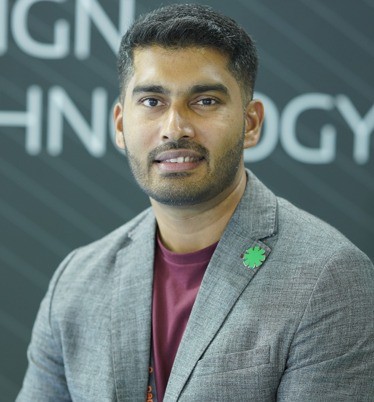
DigitalWorks began in Dubai in August 2020 with a simple conviction: digital strategy is only as good as what actually gets built.
Before founding the company, Ansar had spent years on the inside of businesses across retail, banking, travel, loyalty and logistics — with career stints at Al-Futtaim Group, Riyad Bank, Landmark Group, McFadyen Consulting and IBS Group across the US, Europe and the Middle East. That journey gave him a perspective shaped not by consulting from the outside, but by actually building and running digital businesses, products and experiences.
Along the way, he had seen the same gap repeatedly: the people defining the strategy were often far removed from the people responsible for making it work. So DigitalWorks was built to close that gap — one team that could sit with leadership to define the opportunity, challenge the assumptions, and shape the product and technology, then stay close enough to build, launch and improve it. Strategy and execution, with accountability for the outcome.
What started as a boutique practice in Dubai grew into a distributed digital transformation and technology practice, working with organisations including Al-Futtaim, Sephora, Magrabi, Fenix Outdoor and other leading regional and global brands. The industries and scale evolved, but the operating principle stayed the same: senior people, close to the problem, moving from strategy to execution without the hand-off.
As AI began fundamentally changing what small, high-calibre teams could accomplish, we chose not to simply bolt new tools onto an old delivery model — we rebuilt the way we work, developing and running the model internally before bringing it to clients.
Six years on, DigitalWorks remains true to its original idea: bringing strategy, technology and execution together to turn ambitious ideas into digital systems that actually work.
Start with one thing that works.
A 60-minute working session with two of our engineers. You bring a delivery problem. You leave with a written assessment of where AI would help, where it would not, and what it would take to find out.
No pitch deck. No obligation.